
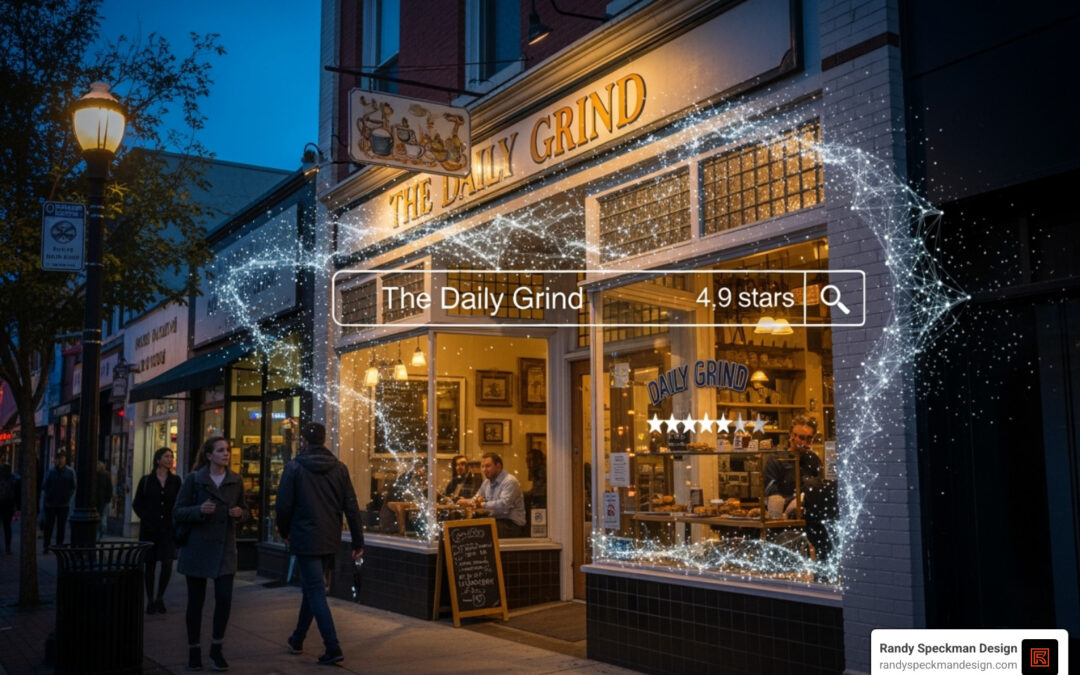
Small Business SEO: The Absolute 2025 Guide
Why SEO is Your Small Business’s Greatest Digital Asset
Small business SEO is the process of optimizing your website to rank higher in search results, helping potential customers find you when they search for your products or services online.
Quick Implementation Guide for Small Business SEO:
- Set up your business profile – Claim and complete your free listing on major search engines
- Research keywords – Find terms your customers actually search for
- Optimize your website pages – Include keywords in titles, headings, and content
- Create quality content – Answer customer questions and showcase expertise
- Build local citations – List your business in relevant directories
- Monitor performance – Use free webmaster tools to track results
If your ideal customers can’t find you online, they’re finding your competitors. With over half of all website traffic coming from organic search and 76% of local mobile searches resulting in a store visit within 24 hours, SEO isn’t just a nice-to-have—it’s essential for survival and growth.
The good news is that small business SEO doesn’t require a massive budget. Unlike large corporations, you can dominate your local market with focused, strategic efforts. When done right, SEO becomes your most cost-effective marketing channel, working 24/7 to bring qualified leads to your door.
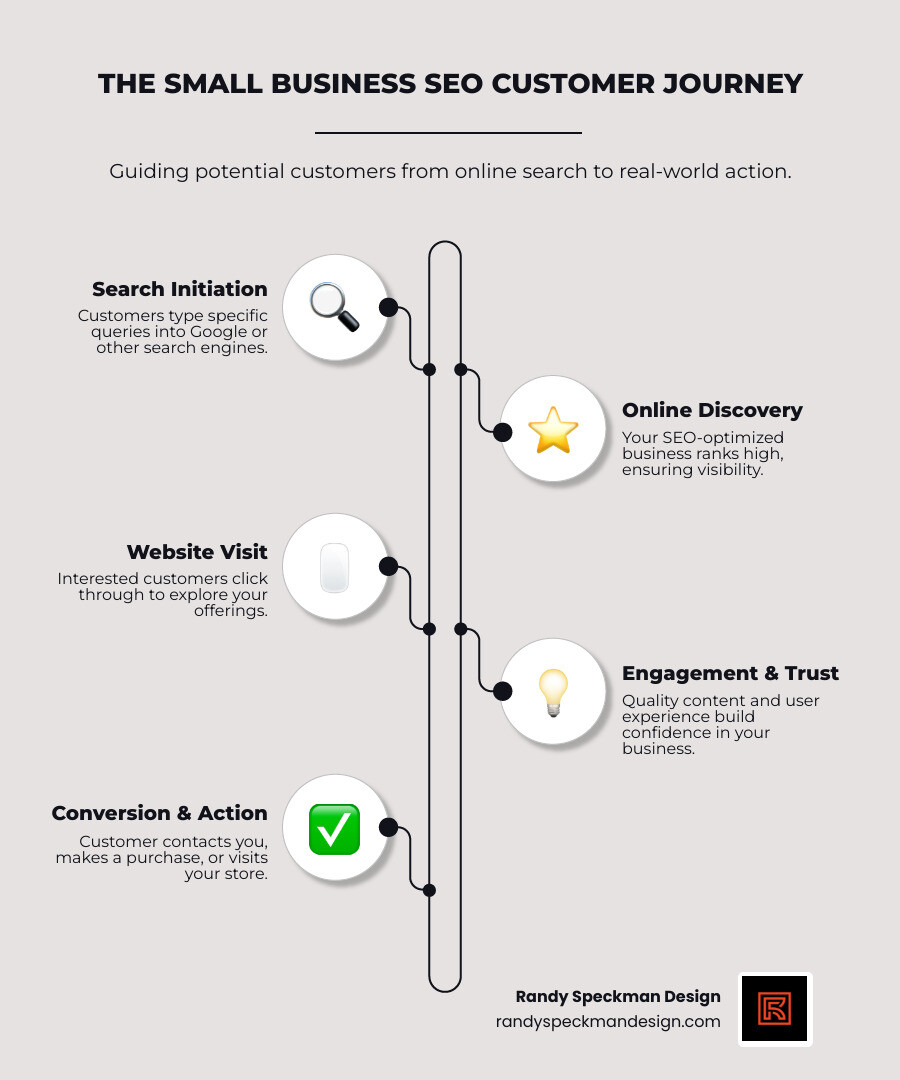
Understanding the SEO Landscape: How Search Engines Rank Websites

Think of search engines as librarians for the internet. They use automated programs called crawlers to find and understand web pages, storing this information in a massive database called the index. When you search, complex ranking algorithms sift through this index to find the most relevant and helpful results for your query.
These algorithms prioritize user search intent—what you’re actually trying to accomplish. They also value E-E-A-T (Experience, Expertise, Authoritativeness, Trustworthiness), meaning they promote businesses that demonstrate they are credible and knowledgeable. Since 53.3% of all website traffic comes from organic search, this is a massive opportunity for small businesses to connect with customers. You can learn more by reading search engine documentation on how search works.
The Core Pillars of SEO
To succeed with small business SEO, you need to focus on four interconnected pillars:
- On-page SEO: Optimizing elements directly on your website, like content, titles, and headings, to make it clear what your business offers.
- Off-page SEO: Building your reputation and authority through external signals, primarily by earning backlinks (links from other reputable websites).
- Technical SEO: Ensuring your website is fast, secure, mobile-friendly, and easy for search engines to crawl and understand.
- Local SEO: Optimizing your online presence to attract customers from local searches, especially those searching for businesses “near me.”
These pillars are tied together by a strong content strategy, which focuses on creating valuable information that answers customer questions and showcases your expertise.
SEO vs. Paid Search Advertising
Should you invest in SEO or paid search ads? Both have their place, but they serve different purposes.
| Feature | Search Engine Optimization (SEO) | Paid Search Advertising (PPC) |
|---|---|---|
| Visibility | Organic search results (unpaid), often below ads | Top of search results, clearly marked as “Ad” |
| Cost | No direct cost per click; investment in time, content, and expertise | Pay-per-click (PPC); cost per click varies by keyword/competition |
| Speed of Results | Long-term (weeks to months for noticeable impact, 6-12 months for significant results) | Immediate (ads appear as soon as campaigns are live) |
| Sustainability | Once ranked, results can be sustained with ongoing effort; compounding benefits | Stops immediately when budget runs out |
| Credibility | Often perceived as more trustworthy and authoritative by users | Some users may skip ads; trust can be lower than organic results |
| ROI | High long-term ROI; becomes more cost-effective over time | Measurable, but ongoing cost; ROI depends on campaign optimization |
SEO is a long-term investment that builds sustainable growth and authority, delivering free, qualified traffic over time. Paid search is excellent for immediate results and promotions. Many businesses use a hybrid approach, using paid ads for quick wins while building their SEO foundation for the future. The key is understanding that small business SEO is a marathon, not a sprint, but it often delivers the highest long-term return.
A Step-by-Step Guide to Your Small Business SEO Strategy

Building an effective small business SEO strategy is about following a recipe. We’ll break it down into manageable steps: foundational keyword research, on-page optimization, and building authority. Each step builds on the last, creating a solid foundation to get your website found by the right people.
Step 1: Foundational Keyword Research
Before you do anything else, you must understand what your potential customers are typing into search engines. This is the foundation of your entire strategy.
- Identify Customer Search Terms: Brainstorm phrases your customers might use, like “best sourdough bread near me” or “custom birthday cakes in [your city].”
- Understand Search Intent: Determine if a searcher wants to learn, buy, or find a local business. Match your content to their intent.
- Focus on Long-Tail Keywords: Target specific, longer phrases like “artisan sourdough bakery in [your city]” instead of broad terms like “bakery.” These have less competition and higher conversion rates.
- Use Research Tools: Start with search engine autocomplete suggestions. For more data, free keyword research tools can provide search volume estimates.
- Analyze Keyword Difficulty: Prioritize keywords with a good balance of search volume and manageable competition. It’s better to rank on page one for a lower-volume keyword than not at all for a high-volume one.
Step 2: Mastering On-Page Optimization
Now, weave your keywords into your website naturally to make each page clear to both search engines and visitors.
- Title Tags: Keep them under 60 characters and include your primary keyword. Example: “Fresh Sourdough Bread Daily | [Your Bakery Name] | [Your City].”
- Meta Descriptions: Write a compelling pitch (under 160 characters) that encourages clicks.
- Header Tags (H1, H2, H3): Use your main keyword in the H1 tag (the main page title). Use H2s and H3s for subheadings to structure content and improve readability.
- SEO-Friendly URLs: Make URLs short and descriptive, like yourbakery.com/sourdough-bread.
- Image Alt Text: Describe your images for search engines and accessibility, including keywords where natural.
- Internal Linking: Connect related pages on your site to guide visitors and show search engines how your content is related.
- High-Quality Content: The foundation of on-page SEO is creating genuinely helpful content that answers questions and solves problems for your audience.
Step 3: Building Authority with Link Building & Technical SEO
Beyond your page content, search engines evaluate your site’s credibility and technical health.
- Backlinks: These are links from other websites and act as “votes of confidence.” Focus on quality over quantity, earning links from relevant, reputable sources. Great content makes this easier, as people naturally link to helpful resources.
- Local Directory Listings: Get listed in local chamber of commerce sites, industry directories, and review sites. Ensure your business name, address, and phone number (NAP) are identical everywhere.
- Website Speed: A slow site hurts user experience and rankings. Use free page speed analysis tools to find and fix issues. Core Web Vitals are key metrics here.
- Mobile-Friendliness: Your site must work perfectly on mobile devices, as major search engines primarily use the mobile version of a site for ranking.
- Site Security (HTTPS): A secure site (with an SSL certificate) protects visitors and builds trust.
These technical elements create a stable foundation for all your small business SEO efforts.
The Power of Local SEO for Brick-and-Mortar Businesses

For any business with a physical location or local service area, local SEO is a game-changer. Consider this: 76% of people who search for something nearby on their phone visit a business within 24 hours, and 28% of those searches lead to a purchase. If you’re not visible in local search, you’re missing out on real customers.
Here are the key tactics to dominate local search:
- Claim and Optimize Your Business Profile: This free listing is non-negotiable. Claim your profile on major search engines and fill out every single section: description, categories, hours, photos, and website. A complete profile appears more trustworthy to search engines and customers. Be sure to verify your business to unlock all features.
- Ensure NAP Consistency: Your business Name, Address, and Phone number (NAP) must be identical everywhere online—your website, your business profile, social media, and directories. Inconsistencies confuse search engines and hurt rankings.
- Manage Customer Reviews: Positive reviews are local SEO gold. Encourage happy customers to leave them and respond to every review, both positive and negative. This engagement shows you care and boosts your local ranking.
- Build Local Citations: Get your business information listed in relevant local and industry directories. This reinforces your local presence. Again, consistency is key.
- Create Location-Specific Content: If you serve multiple areas, create dedicated pages for each location with unique, local content and testimonials. Blog posts about local events or landmarks also help establish you as part of the community.
Measuring Success and Adapting to the Future
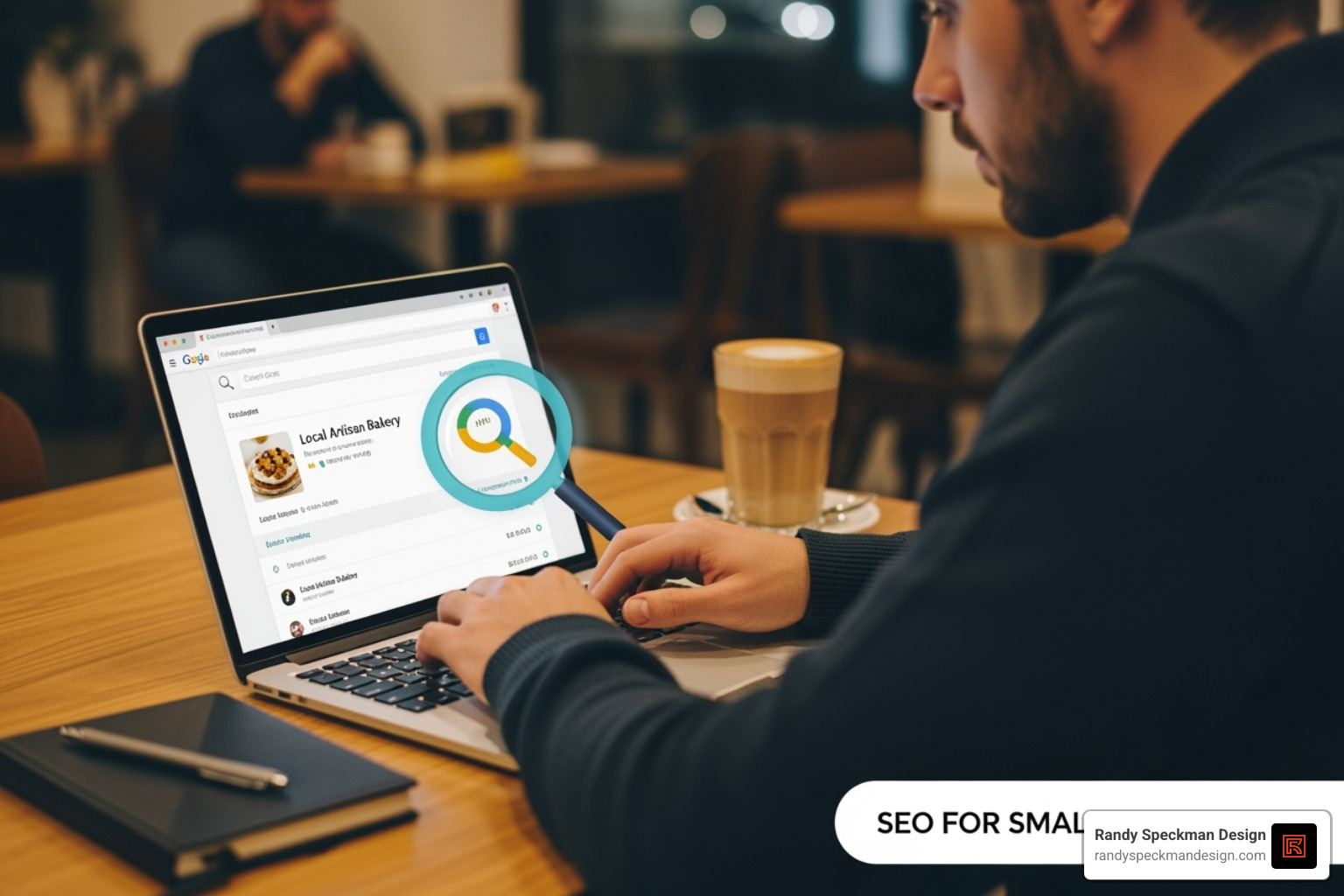
The final step in any small business SEO strategy is to measure your efforts and adapt. Tracking performance shows you what’s working and where to focus your energy.
Key metrics to watch include organic traffic (visitors from search), keyword rankings, and website conversions (contact form fills, calls, purchases). For local businesses, business profile actions like calls and direction requests are also crucial.
SEO is a long-term game. You may see small gains in 3-6 months, but significant growth typically takes 6-12 months. The payoff is worth the patience, as SEO builds momentum and delivers lasting value, unlike paid ads that stop when you stop paying.
Looking ahead, the evolution of search with AI is changing the game. AI-powered search engines are starting to provide direct answers, making it more important than ever for your content to be seen as the definitive source. This means doubling down on E-E-A-T—demonstrating your real-world Experience, Expertise, Authoritativeness, and Trustworthiness. The businesses that thrive will be those that create content so helpful and authoritative that both AI and humans can’t ignore it.
Essential Tools for Tracking SEO Performance
- Webmaster Tools: Free tools from search engines show you which keywords bring you traffic and alert you to technical issues.
- Website Analytics: Another free tool that shows you what visitors do once they’re on your site, where they came from, and which pages are most popular. You can find guides online to help set up analytics for your website.
- Business Profile Insights: Provides data on how customers interact with your local listing, including calls, website clicks, and direction requests.
- Page Speed Tools: Free online tools analyze your site’s speed and provide actionable recommendations for improvement.
- Rank Tracking Tools: While many are paid, these tools help you monitor your keyword rankings over time and compare them to competitors.
Frequently Asked Questions about Small Business SEO
We’ve gathered the most common questions about small business SEO to give you straightforward answers that cut through the confusion.
How much does SEO for a small business typically cost?
SEO doesn’t have a fixed price tag. The cost is an investment of either your time or your money. If you hire a professional, costs can range from a few hundred to several thousand dollars per month.
The price depends on factors like your industry’s competitiveness, your location, the current state of your website, and the scope of services required. The most important thing is to distinguish between “cheap” and “affordable” SEO. Cheap services often use risky tactics that can get your site penalized by search engines. Affordable, effective SEO focuses on delivering real value and sustainable results through proven strategies. When evaluating options, look for transparency and a focus on long-term growth.
How is AI changing the landscape of SEO?
AI is making search engines smarter. They can now understand user intent better and sometimes provide direct answers in the search results. For your small business SEO, this means your content must be exceptional.
Your goal is to be the trusted source that AI wants to cite. This reinforces the importance of E-E-A-T (Experience, Expertise, Authoritativeness, and Trustworthiness). Focus on creating unique, expert-level content that showcases your real-world knowledge. AI can’t replicate your personal experience, and that’s your competitive advantage.
How long does it take to see results from SEO?
SEO is a long-term strategy. Anyone promising instant results is not being honest. While you might see minor improvements in a few months, you should plan for a longer timeline.
- 3-6 Months: Expect to see noticeable movement in keyword rankings and organic traffic.
- 6-12+ Months: This is the typical timeframe for significant growth that impacts your bottom line.
Factors like your industry, competition, and the consistency of your efforts will affect this timeline. The good news is that SEO benefits compound. The authority you build today will continue to bring in traffic for years, making it one of the most cost-effective marketing strategies in the long run.
Conclusion: Build Your Foundation for Lasting Growth
We’ve covered the essentials of small business SEO, from understanding search engines to implementing practical on-page, off-page, technical, and local strategies. The key takeaway is that SEO is not a mysterious art but a systematic process that any dedicated business owner can leverage for growth.
SEO is a marathon, not a sprint. Success comes from consistent effort and a commitment to providing genuine value to your audience. The businesses that win online are those that build a solid foundation, page by page, that earns trust from both customers and search engines.
A high-performing website is the cornerstone of success. Marketing, digital strategy, and conversion optimization work together to ensure your site doesn’t just get found—it turns visitors into loyal customers.
Ready to stop being invisible online and start building a digital presence that drives real results? The foundation you build today will support years of growth.
Your customers are searching for you right now. Let’s make sure they find you.