
Design and Print Marketing Materials: Perfect 2025
Why Your Business Needs Both Digital and Physical Marketing Materials
Design and print marketing materials remain a cornerstone of successful marketing. Here’s what you need to know:
Essential Print Marketing Materials for Small Businesses:
- Business Cards – Professional networking and contact sharing
- Flyers & Brochures – Detailed product/service information
- Postcards – Direct mail campaigns and event promotion
- Posters & Banners – Visual advertising for locations and events
- Promotional Products – Brand awareness items like pens, mugs, t-shirts
Key Benefits of Print Marketing:
- 56% of people find print marketing most trustworthy compared to digital
- 82% of consumers trust print advertisements when making purchase decisions
- 67% of shoppers prefer direct mail for making purchasing decisions
- 40% visit company websites after reading direct mail
In a saturated digital landscape, physical materials cut through the noise. A well-designed brochure or business card offers a tangible connection between your brand and potential customers.
Print marketing builds trust. Research shows consumers find printed materials more credible, a vital factor when almost 2-in-3 consumers feel companies have lost the human element of customer experience.
I’m a design professional who has helped over 500 entrepreneurs create strategic marketing materials that get results. I’ve seen how the right physical marketing pieces can transform a business’s ability to connect with customers and drive sales.
Why Print Still Matters in a Digital World
In a screen-saturated world, print marketing is thriving. While others fight for digital attention, smart businesses use print to stand out.
The tangibility of print creates a multi-sensory experience that digital ads can’t replicate. The feel of quality paper and the vibrancy of colors create connections that stick.
Print also delivers a high trust factor. A 2016 study found that 56% of people find printing to be the most trustworthy type of marketing, and 82% of consumers trust print ads when making purchase decisions. This credibility builds real brand authority.
Print benefits from less market saturation. Unlike a crowded inbox, a postcard on a counter has a longer lifespan and gets seen repeatedly, leading to higher engagement rates.
Cutting Through the Digital Clutter
We’re all drowning in digital noise, leading to information overload and ad blindness. Your digital message competes with thousands of others for mere seconds of attention.
Memorable physical items are a secret weapon. A great brochure or flyer demands notice. Direct mail is effective: 67% of shoppers prefer it for purchasing decisions, and four in ten people will visit a company’s website after reading direct mail from them.
Print is brilliant for reaching local audiences through posters, door hangers, or banners. It also excels at supporting digital campaigns. QR codes, custom URLs, and social media handles on print pieces create a bridge from the physical to the digital world.
Building Customer Trust and Loyalty
A high-quality printed piece conveys professionalism. A premium business card suggests attention to detail, and the perceived value of well-crafted materials tells customers you care about quality.
Print builds lasting relationships. Thank you cards create personal connections, while physical loyalty programs make customers feel valued. This trust is the foundation for repeat business.
Thoughtfully designed print materials build trust. In a temporary digital world, a tangible item creates a powerful connection when you design and print marketing materials.
Choosing Your Arsenal: Effective Print Materials for Every Goal
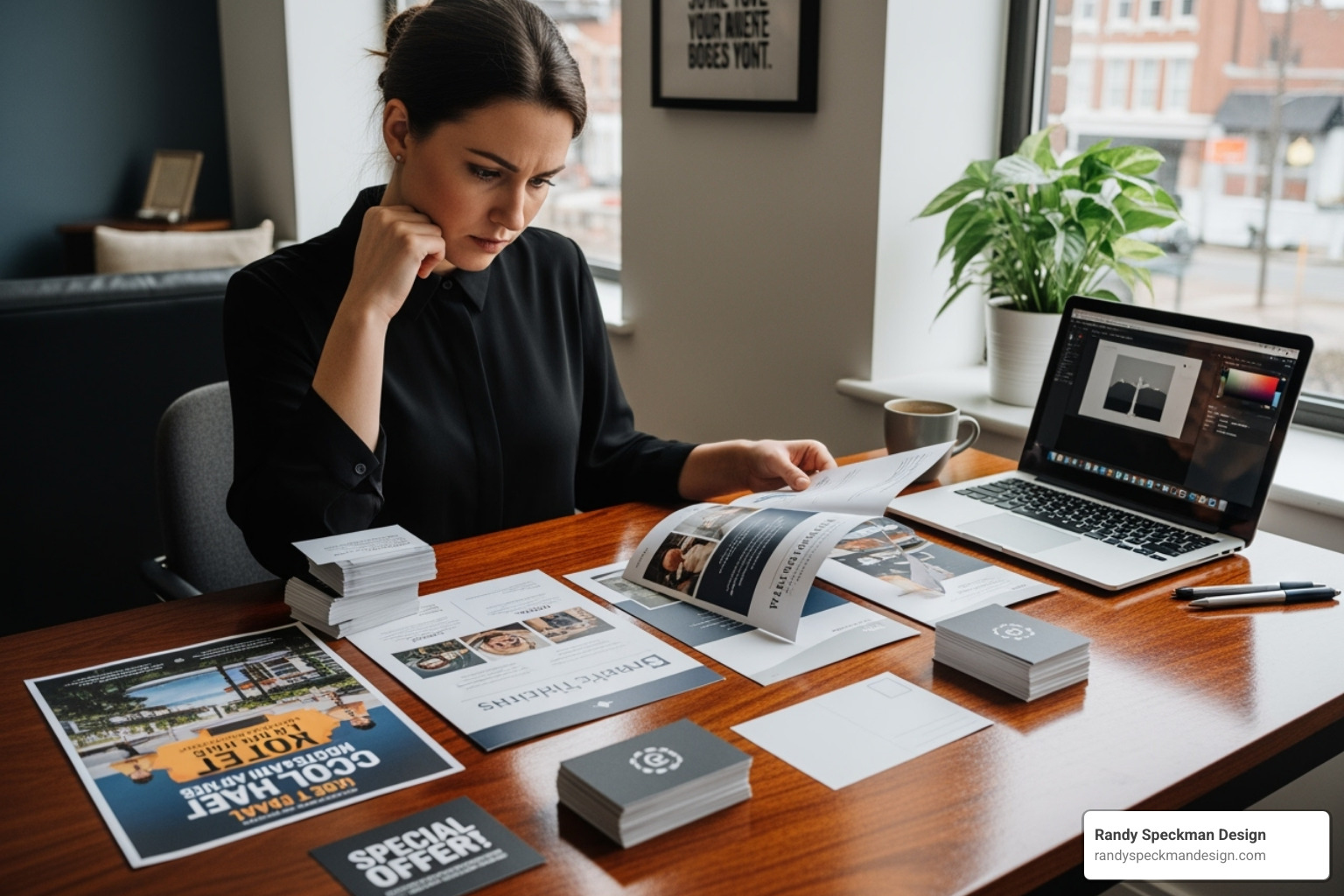
Selecting the right design and print marketing materials isn’t about looks—it’s about matching materials to specific goals. Each print material serves a unique purpose. Understanding this helps you build a marketing arsenal that delivers results.
Your goals—generating leads, building awareness, driving traffic, or nurturing customers—should drive every decision. Clarity on objectives simplifies material selection. Your target audience and budget also play a role. Choose strategically, and effective print marketing can be affordable.
How to Choose the Right Print Marketing Materials
Here are the workhorses of print marketing and their best uses.
Business cards are the networking champion. They are your professional handshake and give you control over the first impression. Handing out 2,000 cards can result in a 2.5% increase in business.
Flyers and leaflets are affordable tools for spreading the word about events, sales, or new products. Their flexibility makes them ideal for targeting specific neighborhoods.
Brochures provide space to detail complex products or services. They nurture leads by providing comprehensive information that builds trust.
Postcards are versatile for direct mail, invitations, or reminders. They are often kept, providing ongoing brand exposure on fridges and pinboards.
Posters grab attention in high-traffic areas, casting a wide net for local events, grand openings, or promotions where maximum visibility is key.
Banners are heavy hitters for events and storefronts. Their large format creates instant brand presence from a distance and ensures your message can’t be missed.
Beyond Paper: The Power of Promotional Products
Promotional products turn customers into walking billboards in a way that feels like a gift. Their practical value is key. Branded t-shirts, tote bags, and mugs get used repeatedly, putting your brand in front of new eyes daily.
Pens are marketing gold—they get shared and used daily. Quality promotional items are giveaways people want to keep. Promotional products create brand ambassadors. When someone uses your item, they organically market your business to everyone around them.
Specialized Print for Maximum Impact
Specialized print materials solve specific marketing challenges.
Menus and price lists inform customers while reflecting your brand’s personality and quality.
Presentation folders organize materials and reinforce your brand during client meetings. Rack cards offer a quick service overview in reception areas.
Door hangers target specific neighborhoods, perfect for service businesses. Stickers and labels add personality to packaging and reinforce brand recognition.
Custom tickets and vouchers add professionalism and help track redemptions. Letterheads on official correspondence show attention to detail.
The key is to think strategically. Each piece should have a clear purpose within your broader marketing strategy, working together to build familiarity and trust.
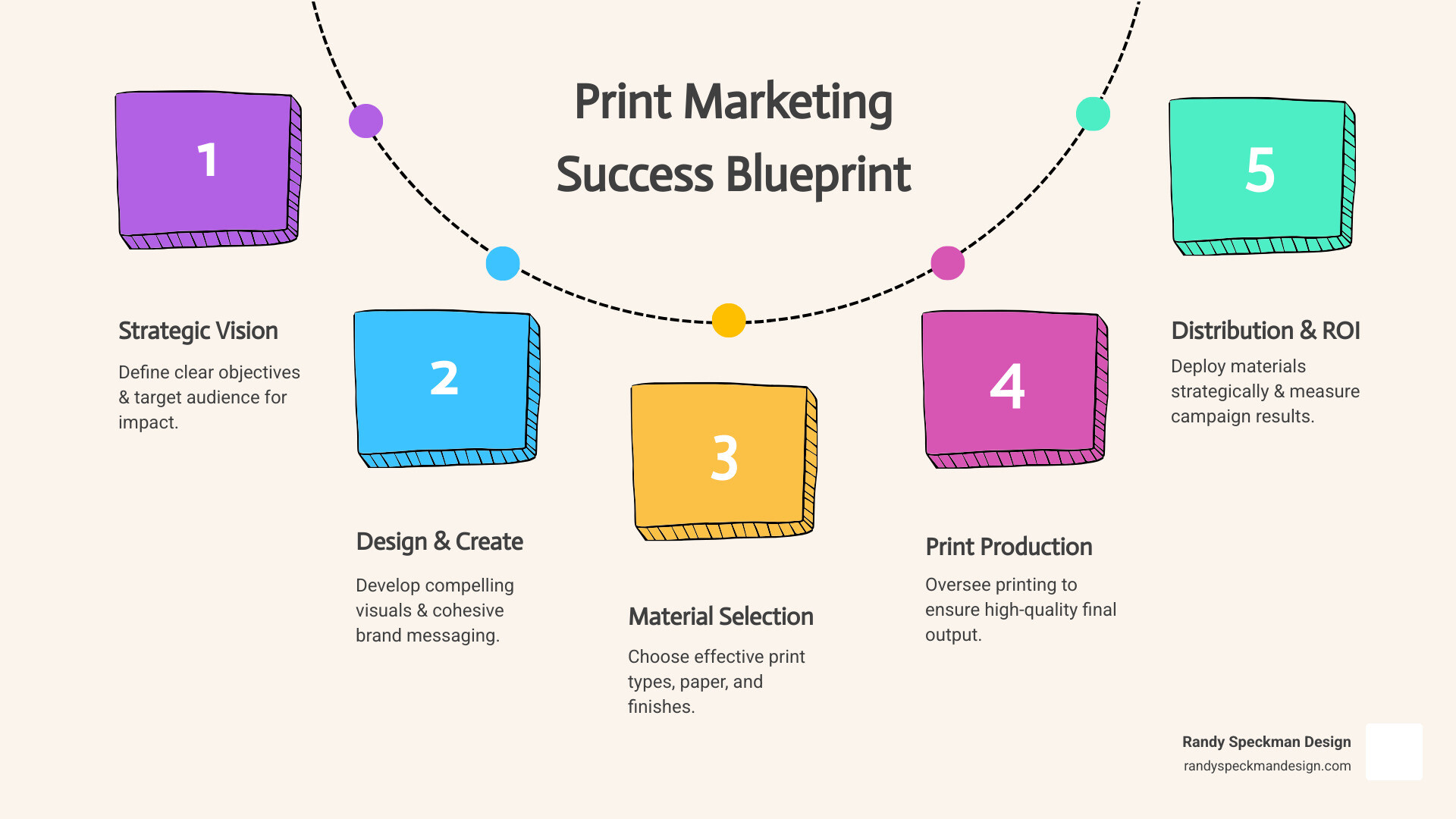
The Blueprint for Brilliant Design and Print Marketing Materials
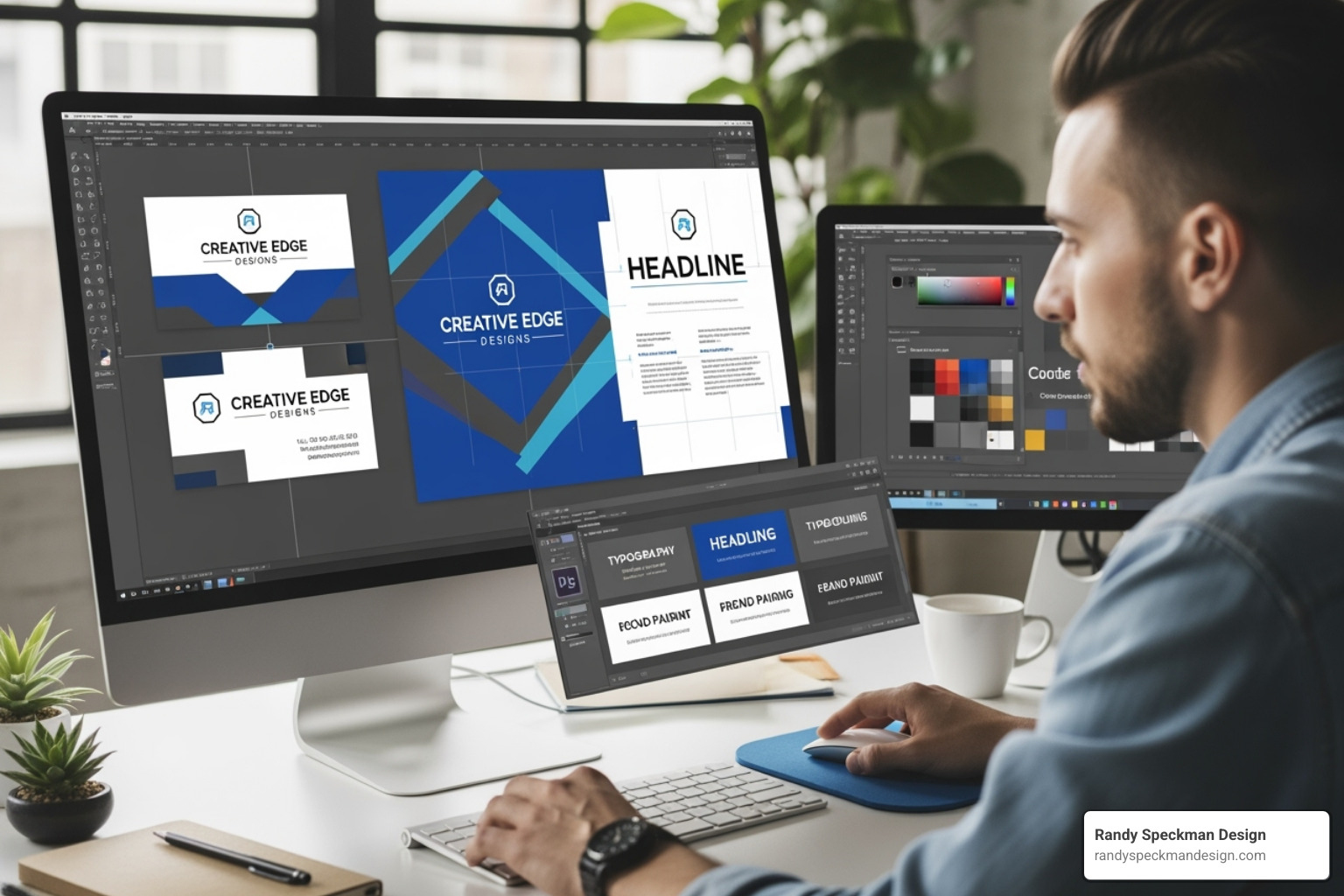
Once you’ve picked your materials, it’s time for design. Great design is a silent salesperson that communicates your message, builds trust, and guides action. Inconsistent branding or cluttered layouts can sabotage success. Following key design principles will make your design and print marketing materials stand out.
Every design choice—colors, fonts, layout—should work together to support your marketing goals.
Ensuring a Consistent Brand Look
Brand consistency makes you instantly recognizable. A brand style guide acts as your rulebook, ensuring all materials look like they come from the same professional business.
Logo usage guidelines are crucial. Define minimum size, white space, and color variations to avoid damaging credibility.
For your color palette, screen colors (RGB) differ from print colors (CMYK). Establish print-safe CMYK versions of your brand colors to ensure accuracy.
Typography reflects your brand’s personality. Serif fonts feel traditional, while sans-serif fonts feel modern. Stick to a maximum of two complementary fonts to avoid visual chaos.
Consistent imagery ties everything together. Maintain the same visual tone (photography, illustration, etc.) across all materials to avoid sending mixed messages.
A matching set of materials that speak the same visual language amplifies your professional image and builds trust.
Key Design Tips for Your Print Marketing Materials
Here are key design elements for professional, effective materials.
A clear call-to-action (CTA) is crucial. Tell people exactly what to do next, such as “Call today” or “Scan this code for 20% off.”
White space is not wasted space. It prevents clutter, guides the eye, and makes key messages pop.
High-resolution images are essential for print. Use images at 300 DPI (dots per inch) to avoid a blurry, pixelated result.
Compelling headlines grab attention by communicating a benefit or solving a problem. Lead with what matters to the customer.
Proofreading is critical. A single typo can make a beautiful design look unprofessional. Always have someone else review your copy.
Good font pairing is key. Use an attention-grabbing font for headlines and a readable one for body text. Avoid pairing two similar fonts.
When these elements work together, your material will be cohesive and clear, telling people who you are, what you offer, and what to do next.
From Screen to Press: Executing and Measuring Your Campaign
With your design ready, it’s time to execute your print campaign. This phase is where strategy meets reality, and getting it right is crucial for success. This involves choosing the right printer, selecting paper and finishes that reinforce your brand, integrating with your digital presence, and setting up systems to measure your return on investment (ROI).
Choosing Paper Stock and Finishes
The paper you choose can make or break your marketing piece. Quality paper can make a simple design feel premium, while flimsy paper can ruin a great one.
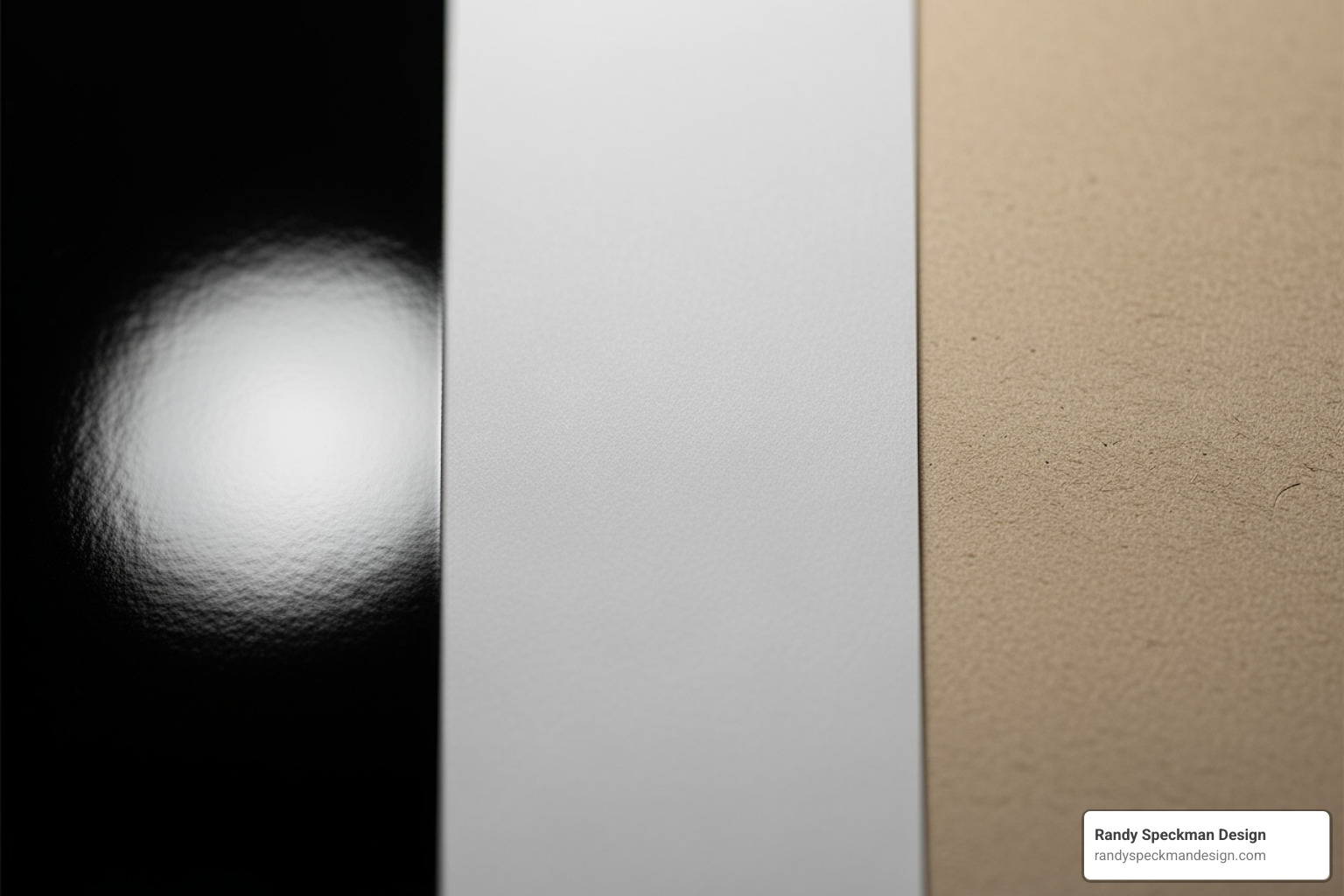
Paper weight (measured in GSM or points) impacts brand perception. Heavier stock (300-350 GSM for business cards) feels more professional. Lighter paper (100-120 GSM) can work for flyers in large distributions.
The finish tells a story. Gloss finishes make colors pop. Matte finishes offer understated elegance and are easy to write on. Uncoated paper has a natural, tactile feel ideal for artisanal or eco-conscious brands. Recycled paper options are also available.
Special finishes create memorable experiences. Foil stamping adds shimmer, embossing/debossing adds texture, and Spot UV creates a compelling contrast.
Integrating Print with Your Digital Strategy
Your design and print marketing materials should be launching pads to your digital ecosystem. Proper integration leads to significantly better results.
QR codes are powerful tools to link to menus, booking systems, or special discounts. The key is to offer value to incentivize a scan.
Custom URLs (e.g., YourBusiness.com/promo) are brilliant for tracking. They direct users to campaign-specific landing pages, telling you which materials are driving traffic.
Display your social media handles prominently. Use campaign-specific landing pages for a smoother user experience and better tracking.
Email list building via print is effective. Offer a valuable incentive and use a QR code to direct people to an easy signup form. Four in ten people will visit a company’s website after reading direct mail from them.
How to Measure the Success of Your Print Campaigns
Measuring print marketing is easier than ever. With the right systems, you can track campaigns effectively.
Unique coupon codes (e.g., POSTCARD20) are a simple way to track which campaign drove a sale.
Dedicated phone numbers for each campaign let you track which materials are generating calls.
QR code analytics show scan rates, times, and locations, helping you understand how people engage with your materials.
Website traffic analysis using campaign-specific URLs can show traffic spikes after a print drop.
Customer surveys are a simple way to get qualitative data. Just ask, “How did you hear about us?”
The ultimate measure is customer lifetime value (CLV). A small investment in print can yield an incredible ROI if it brings in a high-value customer. The goal is to learn and improve. Use insights from each campaign to make your next design and print marketing materials even more effective.
Frequently Asked Questions about Designing and Printing Marketing Materials
What are the most effective print marketing materials for a small local business?
For a small local business, choosing the right design and print marketing materials is key to maximizing impact without overspending.
- Business cards are essential for networking and making a lasting first impression.
- Flyers and door hangers are effective for reaching your immediate community, allowing you to target specific neighborhoods with promotions or announcements.
- Postcards are great for direct mail. They often get kept, providing extended visibility for your brand and offers.
- In-store posters and banners work 24/7 to attract foot traffic and highlight your unique offerings.
How can I design marketing materials if I’m not a designer?
You don’t need to be a graphic designer to create effective marketing materials. There are several excellent options available.
- Online design tools with templates are user-friendly platforms that allow you to customize professional designs without needing design skills.
- Hiring a freelance graphic designer is a smart investment for unique, on-brand materials. They can create custom designs and establish brand guidelines for consistency.
- Working with a full-service design and marketing agency offers a strategic, integrated approach. An agency ensures your print materials work with your digital strategy to drive results and support business goals.
How much should I budget for print marketing?
Budgeting for print marketing involves several factors, but it often delivers excellent value. Consider:
- Design fees: These vary. Templates are low-cost, while custom design is a larger investment in effective communication.
- Printing quantity: This affects the per-piece cost; larger orders are cheaper per item. Order a realistic amount to avoid waste.
- Paper quality and finishes: Investing in quality can pay off by making a better, more memorable impression.
- Distribution costs: Factor in costs like postage from the beginning.
Start small, test, and track your ROI. Scale up what works. While print can have a higher upfront cost than some digital ads, its lasting impact and trustworthiness often deliver impressive returns.
Conclusion
While digital messages vanish in a swipe, design and print marketing materials offer a powerful, tangible connection. Print cuts through digital noise to build the trust and loyalty businesses need.
Consider the difference between a fleeting digital ad and holding a well-crafted brochure. The physical experience is fundamentally more memorable.
Print is a strategic arsenal. Business cards open doors, brochures tell your story, and promotional products turn customers into brand ambassadors. Each piece serves a unique purpose.
Great print marketing requires strategic design that is consistent across all materials. This cohesion creates a professional impression that digital alone can’t match.
The magic happens when you bridge the physical and digital worlds. Integrating QR codes and custom URLs into your print materials guides customers to your online presence. This is a powerful strategy, as 40% of people visit a website after receiving direct mail.
Print doesn’t compete with digital; it complements it. Print materials build the trust and credibility that make digital conversions possible.
A professional design partner can create cohesive strategies where print and digital work together, helping entrepreneurs create marketing materials that drive real results.
Ready to create print materials that work as hard as you do? Explore how professional graphic design services can lift your brand and see how the right design and print marketing materials can transform your business.